Magazine
Ausstellungsansicht mit Besucher*innen, die in der Ausstellung stehen und vor der aufgebauten Bühne Platz genommen haben.

© Foto: Philipp Plum

Water from the Air – An Evening of Science, Art, and Hands-On Exploration

During the Long Night of Science on June 6, 2026, the Humboldt Labor opened its doors for an evening devoted entirely to atmospheric water. Under the title “Water from the Air: Fog, Clouds, and New Approaches to Water Harvesting,” talks, discussions, a reading, and workshops invited visitors to explore the air around us – after all, the atmosphere contains more than ten times as much water as all the world’s rivers combined. Anna-Lisa Dieter, curator of the exhibition “On Water. WasserWissen in Berlin,” opened the evening by introducing the topic and drawing the audience’s attention to those parts of the exhibition that focus on clouds, fog, and new forms of water harvesting.

Putting Ideas into Practice

The open drop-in format Wasser ernten. Design für den städtischen Kreislauf (“Harvesting Water. Design for the Urban Cycle”) offered a chance to get practical. The starting point was Dimitra Almpani-Lekka’s installation “Cheimarros” in the exhibition On Water. In this work, the designer explores how ceramic forms can help channel and collect rainwater in urban environments. The workshop centered on the role atmospheric water plays in the global water cycle – and on the design approaches currently being developed to make use of it. Under Almpani-Lekka’s guidance, visitors experimented with clay, tested their own forms for harvesting water, and created a small object to take home with them.
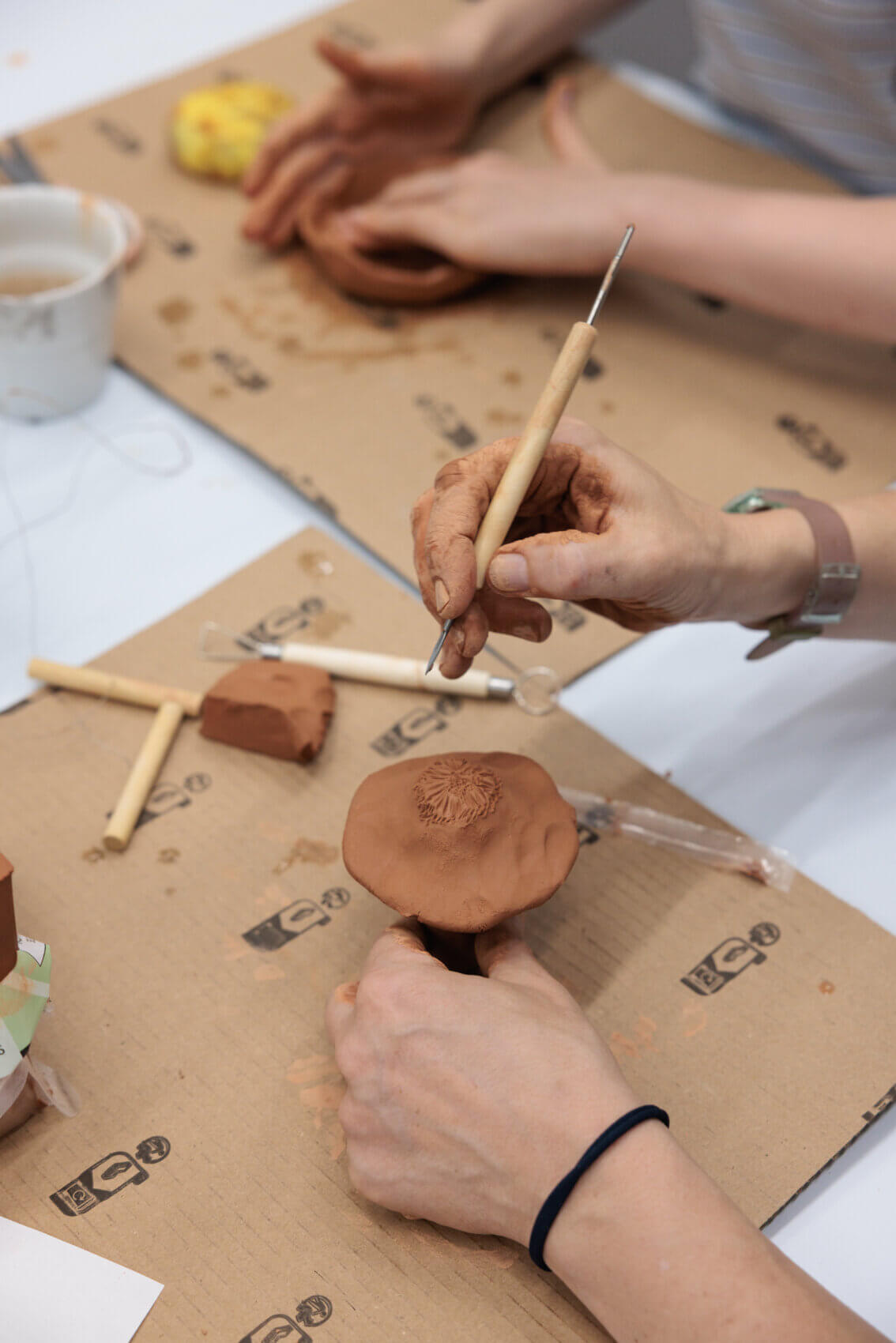
Workshop on water harvesting with designer Dimitra Almpani-Lekka (HU)

Ephemeral Knowledge

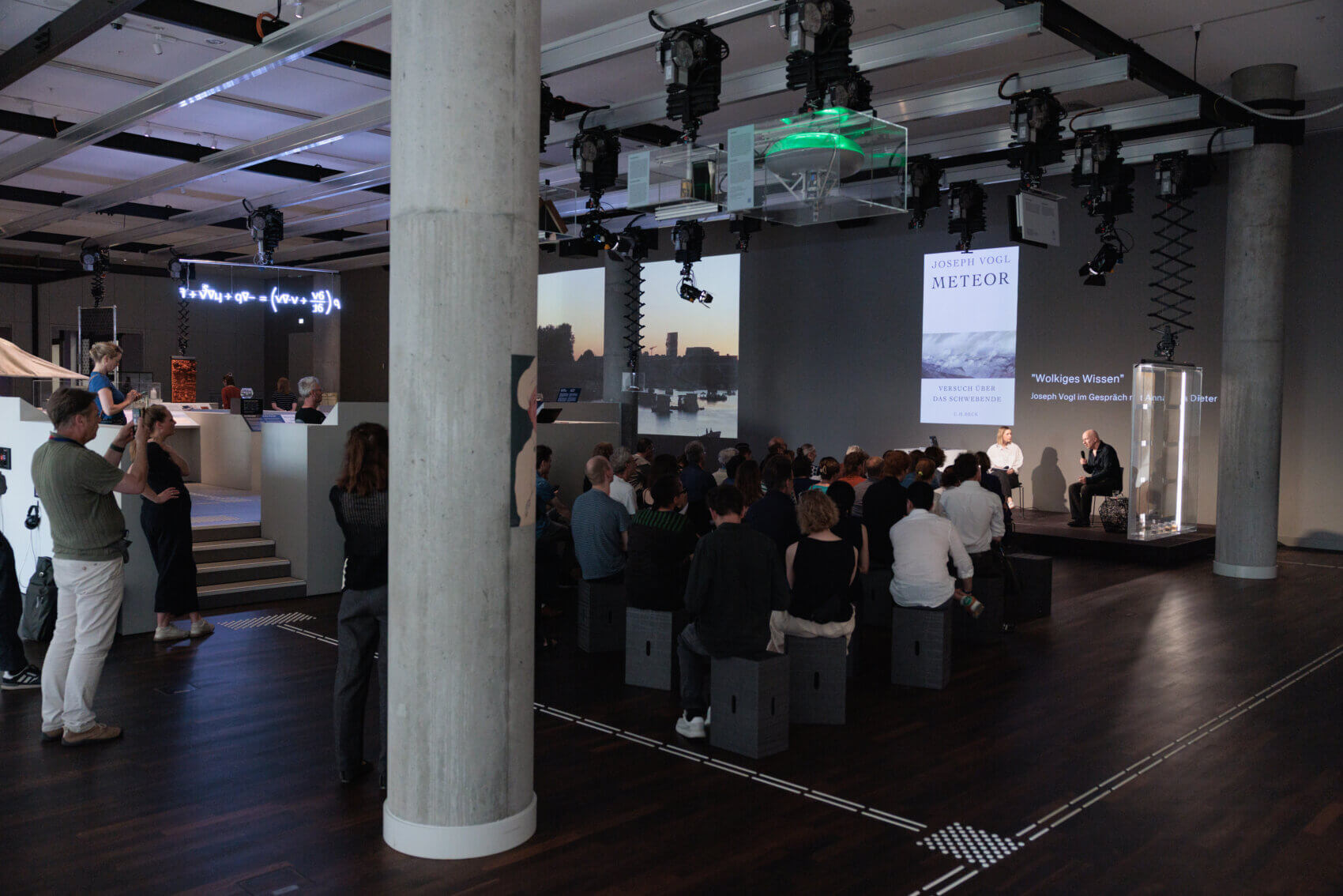
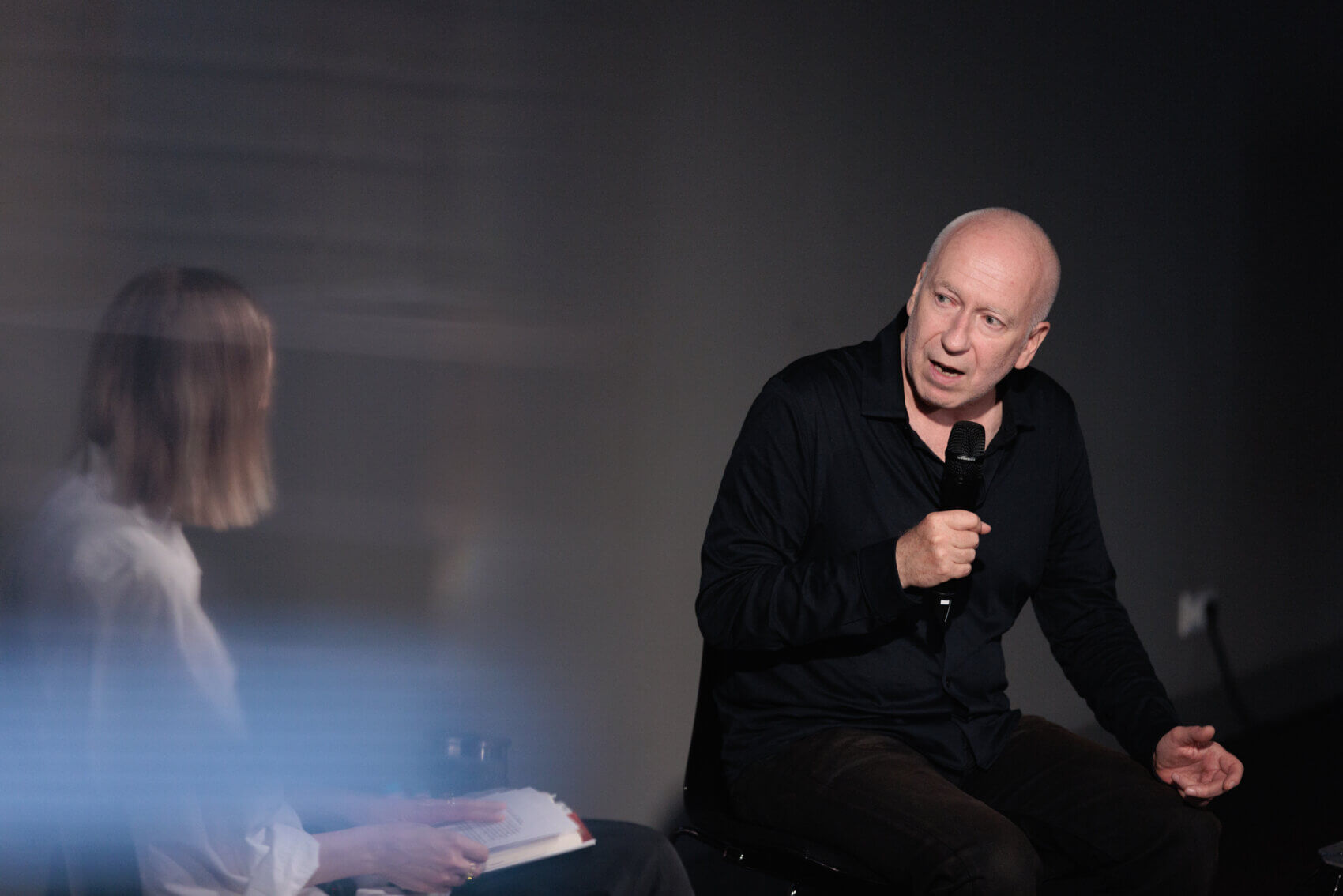
How fleeting forms of water can challenge the way we think was the subject of a reading by literary and cultural scholar Joseph Vogl. In his essay Meteor. Versuch über das Schwebende, Vogl approaches phenomena such as clouds, fog, and mist through texts from literature, philosophy, and science: phenomena without a fixed location, visible yet difficult to grasp with any certainty – and capable of opening up a different kind of attentiveness to the world.

Joseph Vogl (HU) in conversation with Anna-Lisa Dieter (Humboldt Labor)

Science in Dialogue

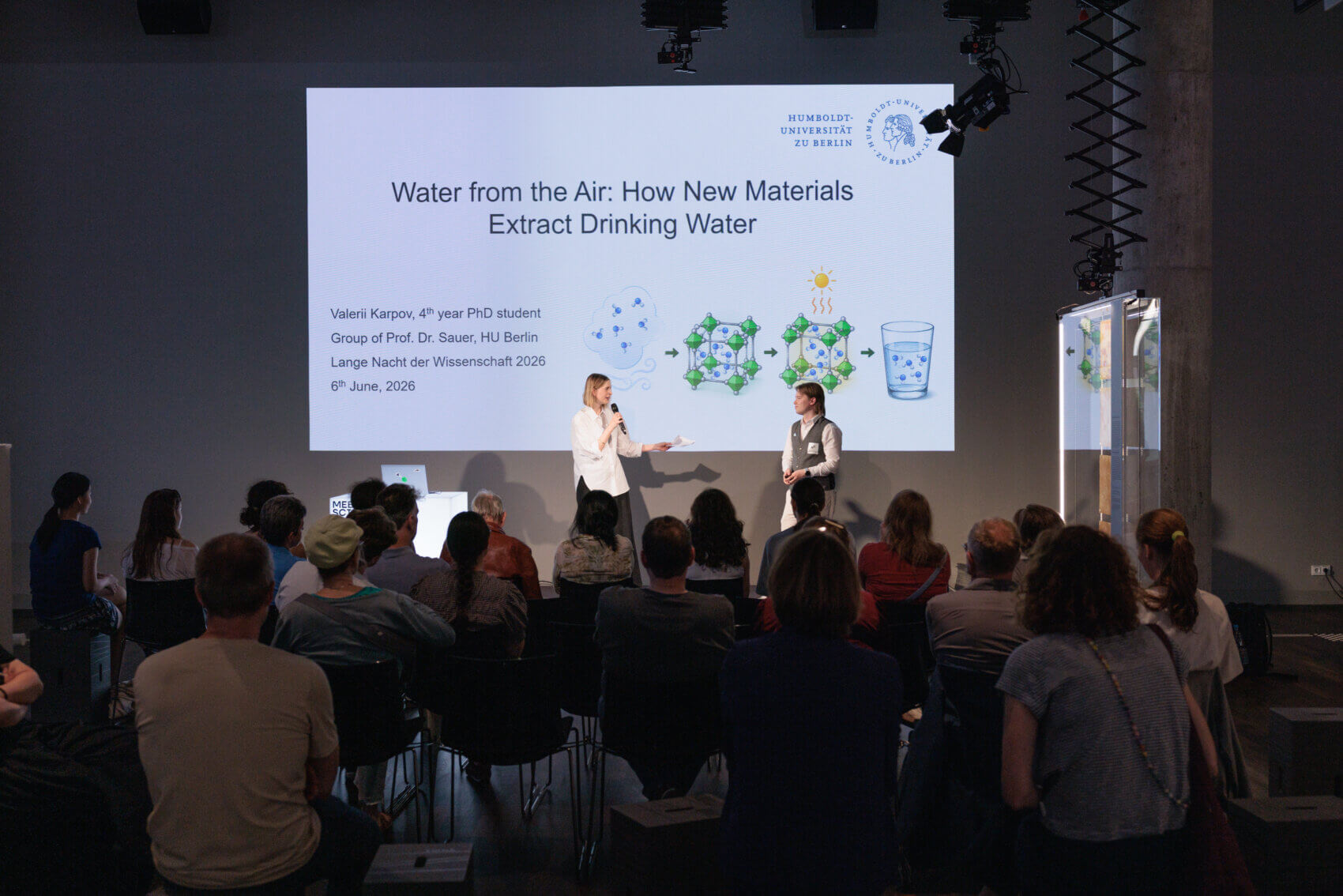
Valerii Karpov, a doctoral researcher in physical chemistry at Humboldt-Universität zu Berlin, demonstrated how drinking water can be extracted directly from the air. He introduced metal-organic frameworks (MOFs) – highly porous materials that can capture water molecules from the atmosphere and make them available for drinking water production – and explained how simulations help researchers understand these processes at the atomic level. One particular highlight of the evening was a video from the laboratory of Omar M. Yaghi in Berkeley, the 2025 Nobel Laureate in Chemistry, who played a key role in the development of MOFs.

Valerii Karpov (HU) presented his research

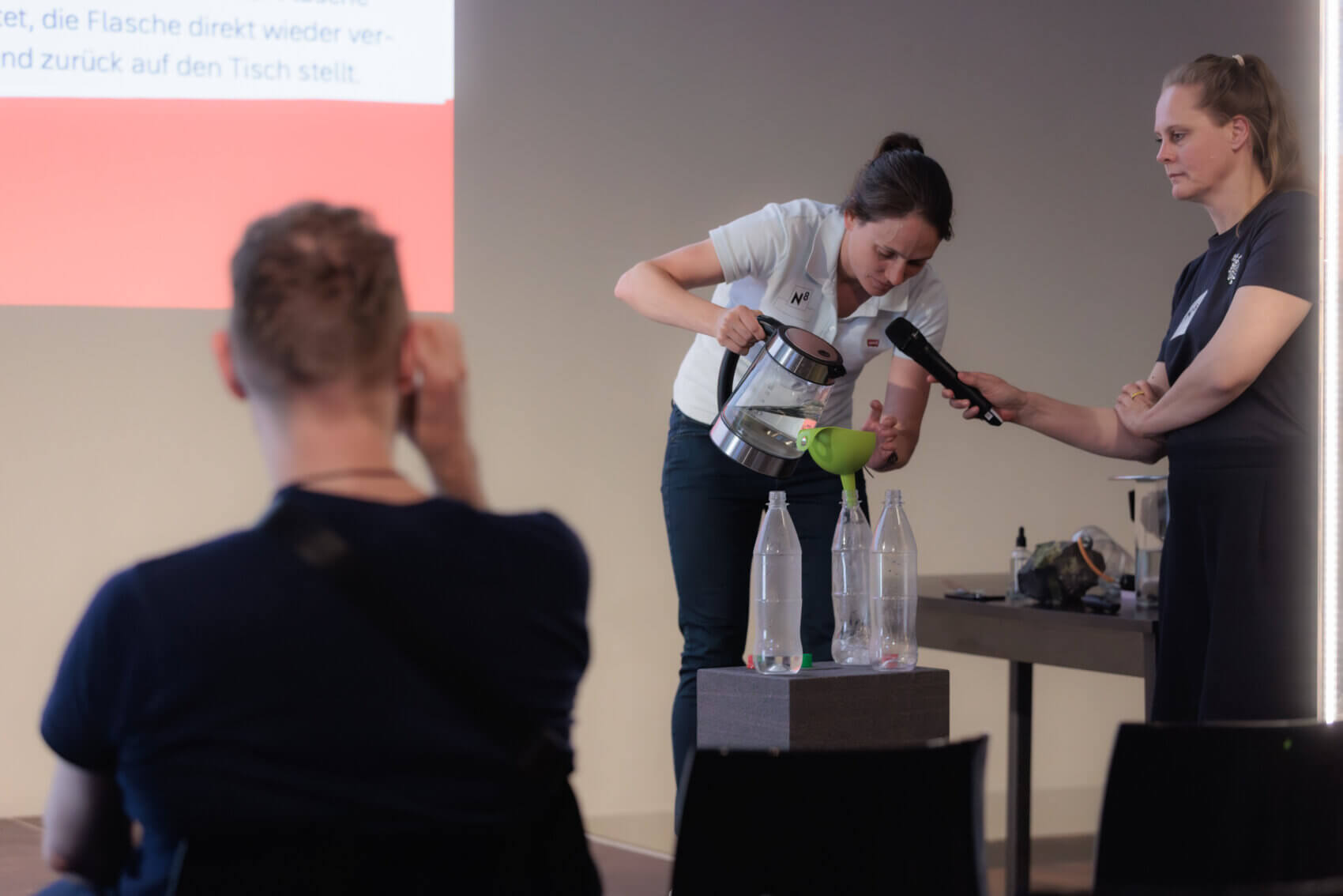
Mathematician Annette Rudolph explored the role clouds play in the Earth’s climate system and how their complex feedbacks with rising temperatures can be better understood – including with the help of artificial intelligence – in a participatory talk featuring a small hands-on cloud experiment.

Cloud experiment with Annette Rudolph (TU) and Heide Barrenechea (Head of the Humboldt Labor)

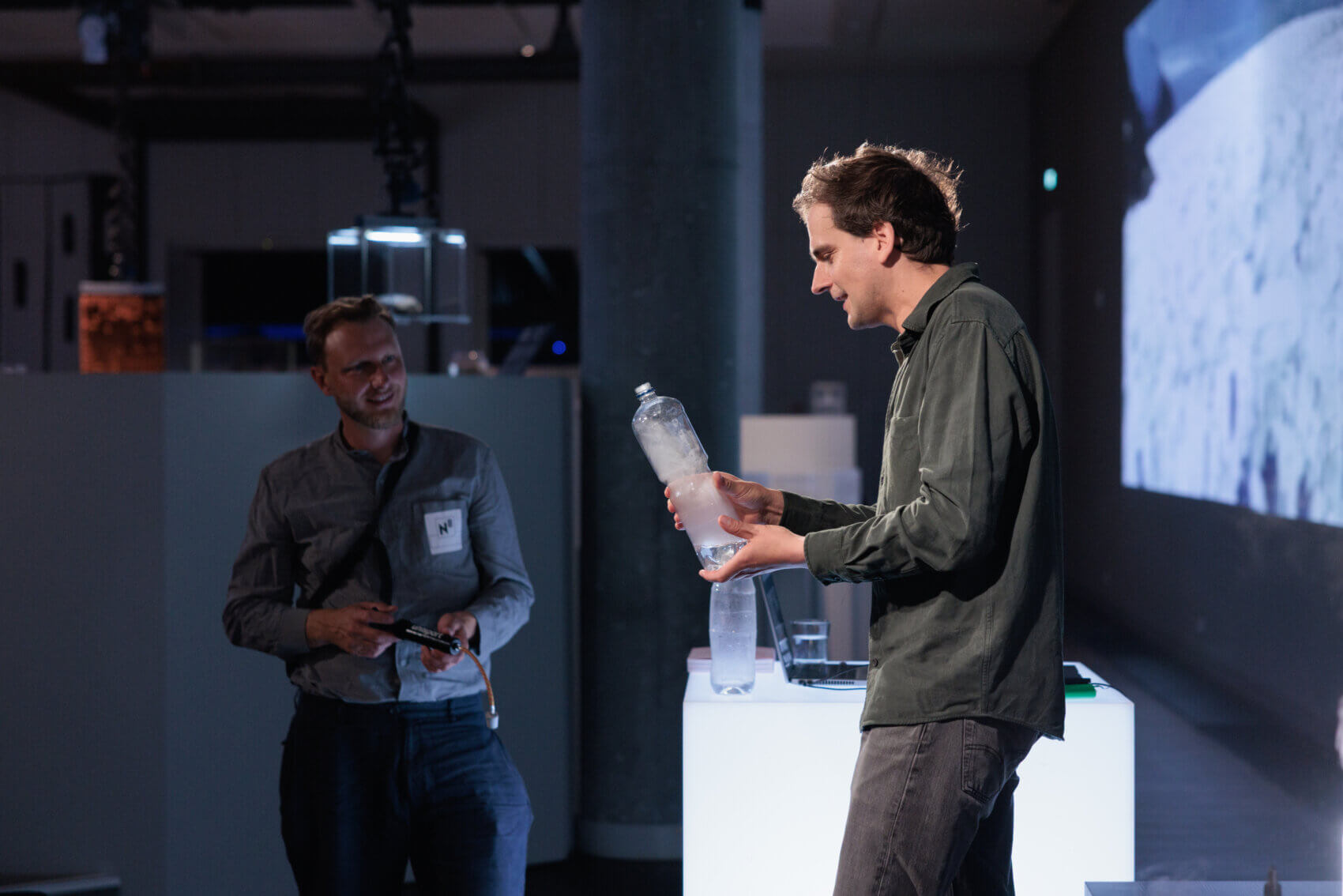
Designer and researcher Clemens Winkler then showed that even seemingly intangible phenomena can be shaped and designed. Working with water vapor, fog, and microclimates as materials, he offered insights into his practice at the intersection of design, art, and science in a short performative presentation, creating a small atmospheric situation directly in the exhibition space.

Clemens Winkler (HU) experimented with fog

Through scientific talks, a literary reading, and design experiments, the Long Night of Science at the Humboldt Labor made tangible just how closely science, art, and design are intertwined in thinking about atmospheric water.