Magazine
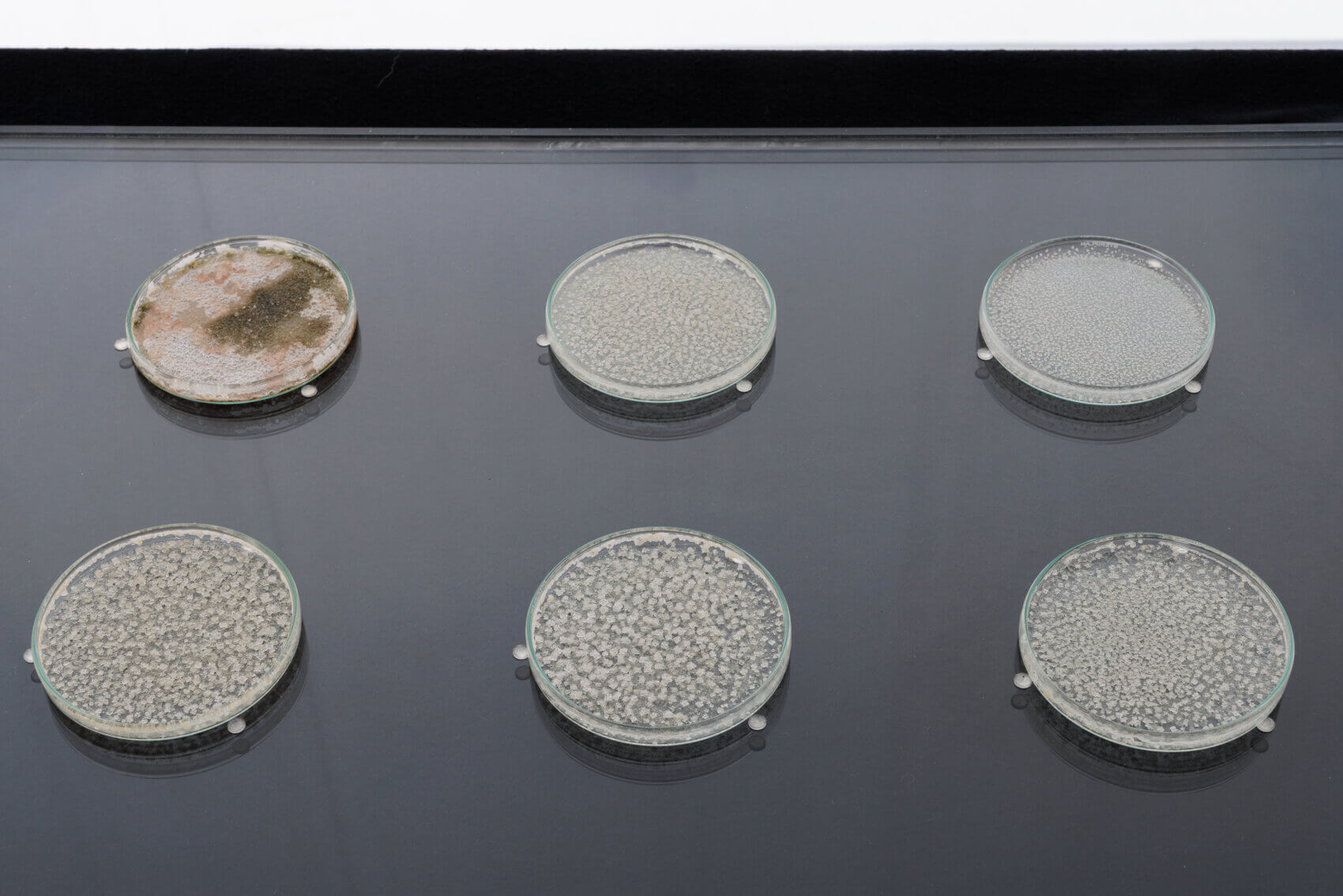
Getrocknete Kieselalgen in Petrischalen in einer Vitrine

Before the genuine Berlin specimens moved in, bottled Chaetoceros diatoms had to stand in. © Photo: Philipp Plum

Object Stories: Max Illner and the Diatoms

From the Series: “Object Stories: Meet the Team”

“How do you exhibit something that is barely visible?” This was the question Max Illner, technical curator at the Humboldt Labor, faced when developing the diatom display case. These microorganisms native to Berlin made it clear that the challenge went far beyond their tiny size: For Max Illner, the fascinating question of interpretation lies in how to convey both the researchers’ enthusiasm for the universe under the microscope and the significance of these barely visible organisms.
The Berlin diatoms in the exhibition On Water. WasserWissen in Berlin

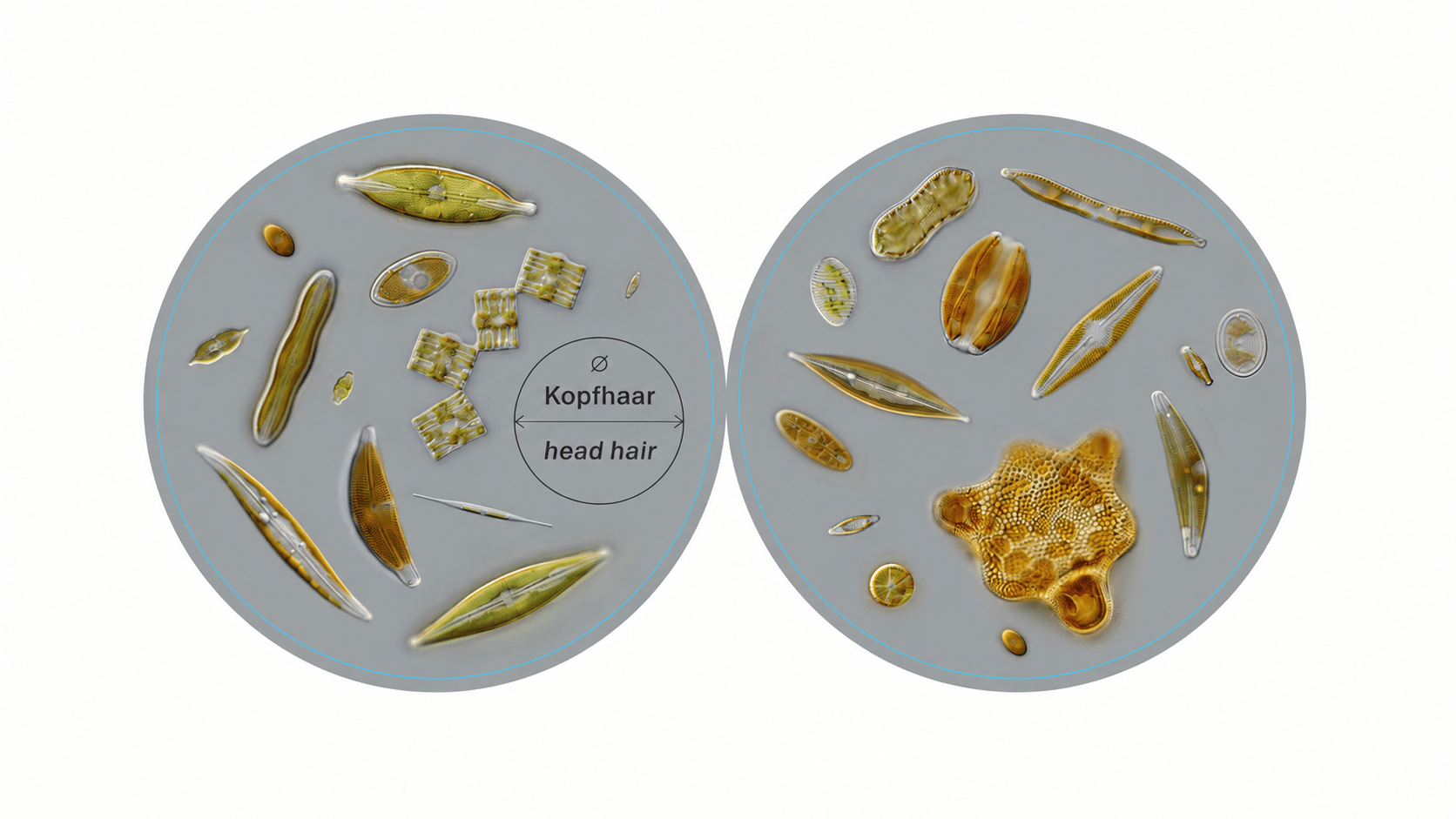
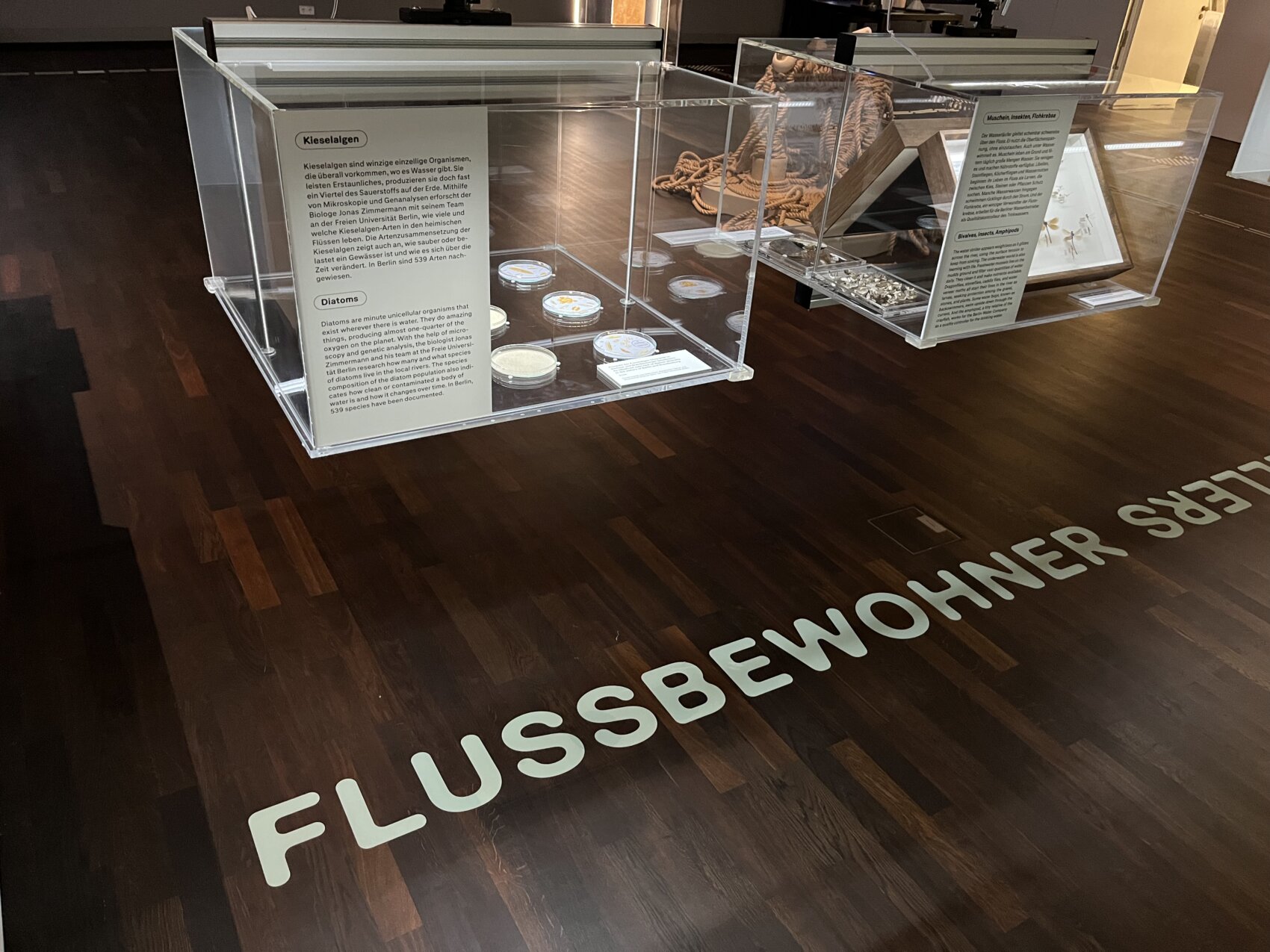
In the exhibition On Water. WasserWissen in Berlin, diatoms are the smallest representatives in the series of river dwellers. No larger than the diameter of a human hair, they are almost entirely invisible to the naked eye, yet they possess true superpowers: They are responsible for up to a quarter of global oxygen production. This makes them a vital part of the planet’s life-support system. They are also astonishingly diverse: The “Diatomeen” research group at the Botanic Garden (Freie Universität Berlin) has identified 539 species in Berlin alone.

“A confession up front: The first diatoms came out of a bottle. When the team had to finish the exhibition in fall 2025, it was nearly impossible to obtain natural diatoms because of the season,” explains the technical curator. Diatoms grow primarily in spring and are displaced by cyanobacteria over the course of the summer. Commercially sourced diatoms therefore had to stand in at first. The genuine Berlin specimens would have to wait.

A glimpse into diatom harvesting

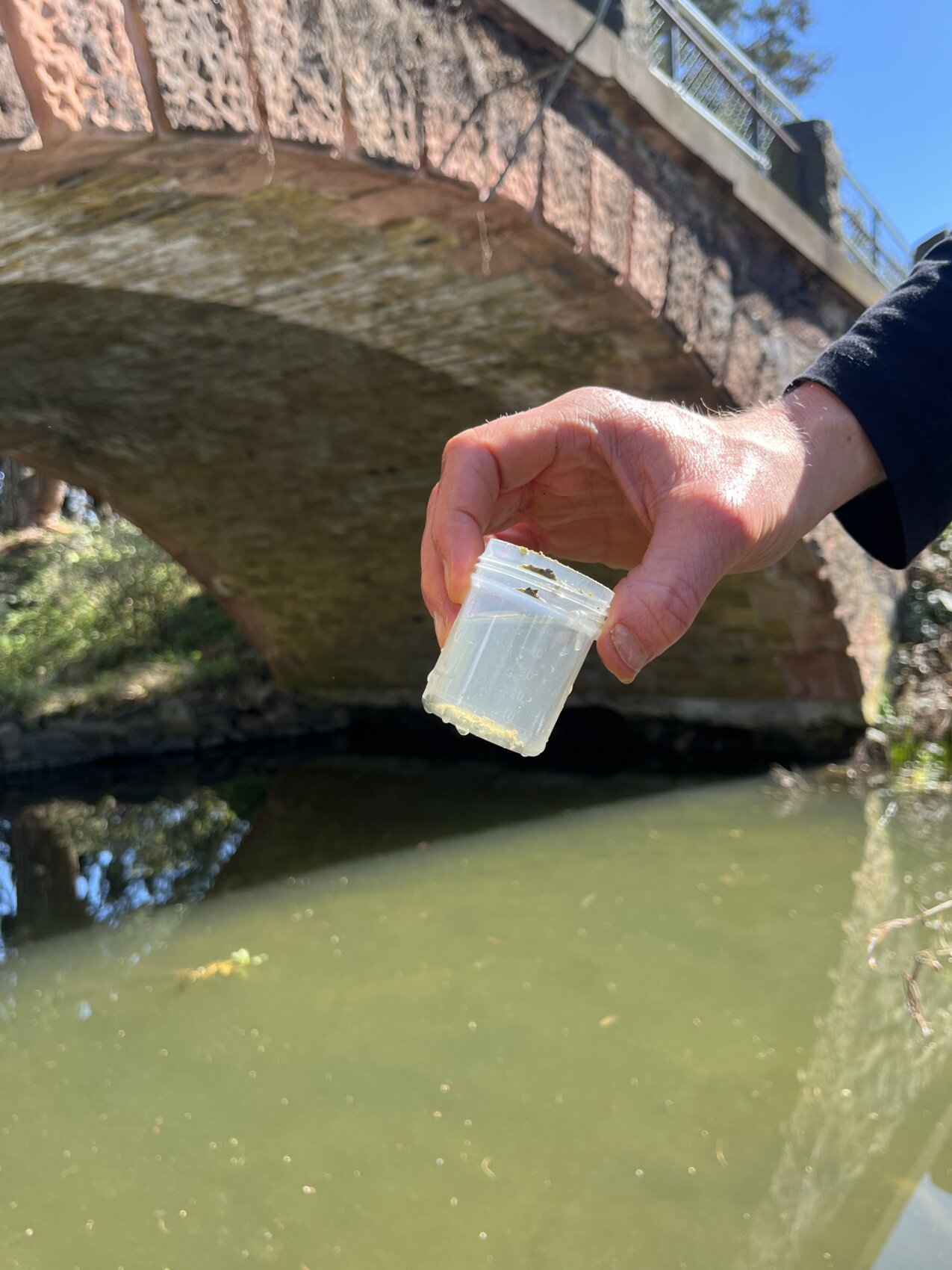
In April 2026, the opportunity finally arose to visit Jonas Zimmermann—the head of the research group at the Botanic Garden—and collect diatoms together. Using a toothbrush, the team scraped green streaks from the edge of a small pond into sealable containers before later drying them in Petri dishes. Max Illner remembers the visit particularly well:

„The Botanic Garden provided a beautiful setting. More than anything, though, it was impressive to experience the scientists’ enthusiasm for these tiny organisms firsthand at their workplace and to understand what opens up under the microscope in just a few drops of water.”

The diversity of Berlin’s diatoms under the microscope

To allow visitors to experience some of this diversity as well, the display case contains visualizations produced by the research group in identical Petri dishes alongside the diatom samples—which are now genuinely from Berlin. They show a typical mixture of common Berlin diatoms and, as idealized microscope images, make visible what remains hidden from the naked eye: a diverse, living universe in a drop of water.

Max Illner

Max Illner has been technical curator at the Humboldt Labor since 2021. Here, he combines conceptual work with technical and organizational expertise in his own exploratory practice. For the exhibition On Water, he was part of the curatorial team, curated individual sections, and was responsible for media planning. He understands exhibition-making in the broadest sense: He develops concepts, gets hands-on himself, and understands both the logic of the individual trades and how they work together. He begins with the intended result in mind, anticipating from the outset how the individual elements will function in terms of staging and interpretation and how they will come together as a whole. He also plays a key role in the operation and implementation of the Humboldt Labor’s event program.