Magazine
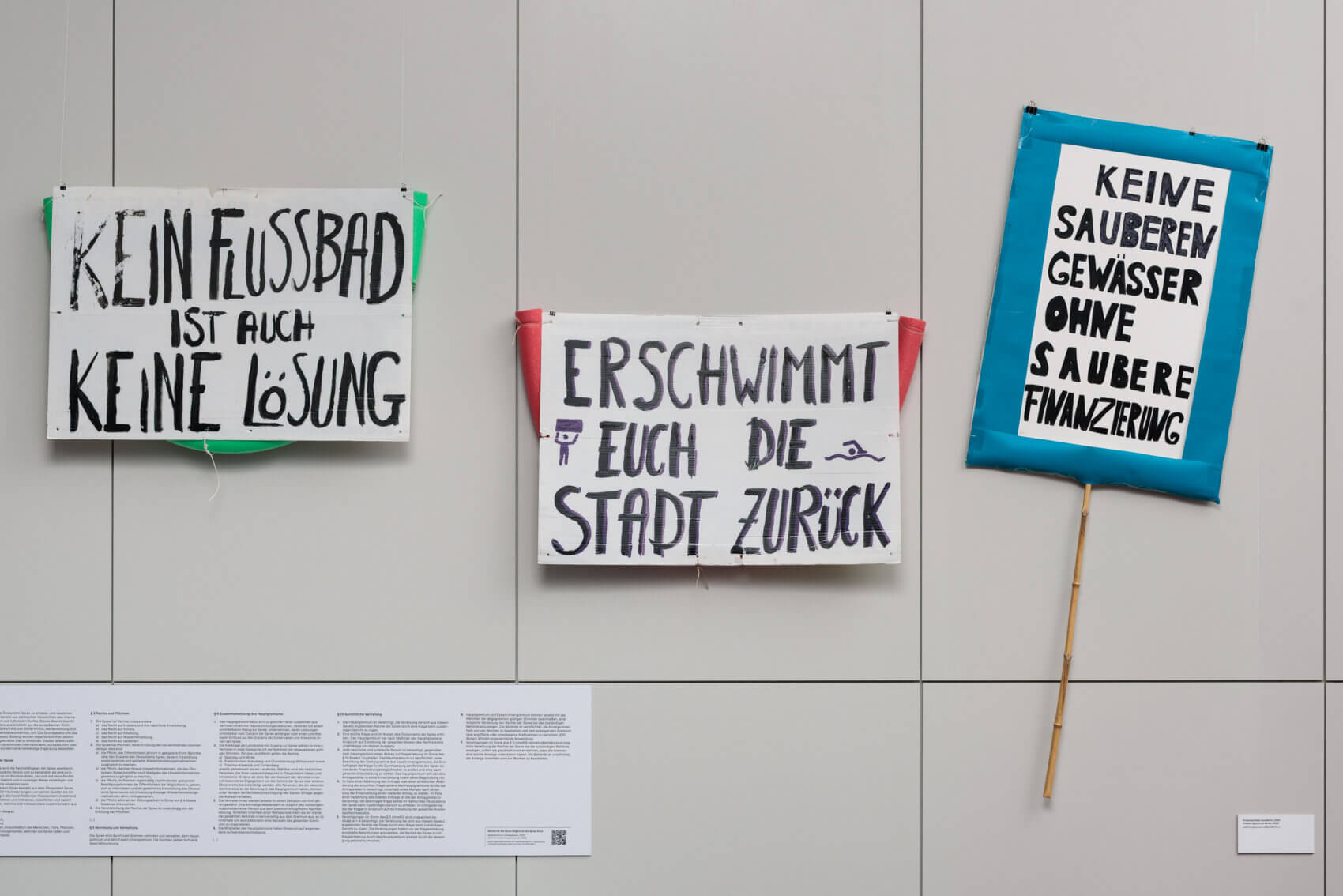
Ausstellungsansicht mit drei Protestplakaten mit der Aufschrift "Kein Flussbad ist auch keine Lösung", "Verschwimmt euch die Stadt zurück" und "Keine sauberen Gewässer ohne saubere Finanzierung" an einer Wand. Daneben sieht man einen Ausschnitt des Gesetzentwurfs "Rechte der Spree".

© Foto: Philipp Plum

Object Stories: Lena Fließbach and the Rights for the Spree River

Lena Fließbach is particularly fascinated by exhibition objects that make social change visible. As she moves through On Water. WasserWissen in Berlin, the Humboldt Labor’s Curator for Outreach repeatedly finds herself drawn to two objects in particular: the protest posters and the draft law Rights of the Spree.

Rivers are not merely infrastructures and usable resources. They are living actors with needs of their own. But what happens when we take those needs seriously?
The posters from Berlin’s WasserZeichen demonstration stand as symbols of activist efforts to initiate a new way of engaging with local bodies of water. The draft law, created specifically for the exhibition by the organizations Green Legal Impact e.V. and Rechte der Natur e.V., is an attempt to give this idea a legal form. Together, they tell a story of changing perspectives: of recognizing rivers as vital ecosystems, as living beings, and as lifelines of our planet. For Lena Fließbach, this culminates in a clear demand: “They should have the right to flow freely, to be clean, and to exist in community with all other living beings.”
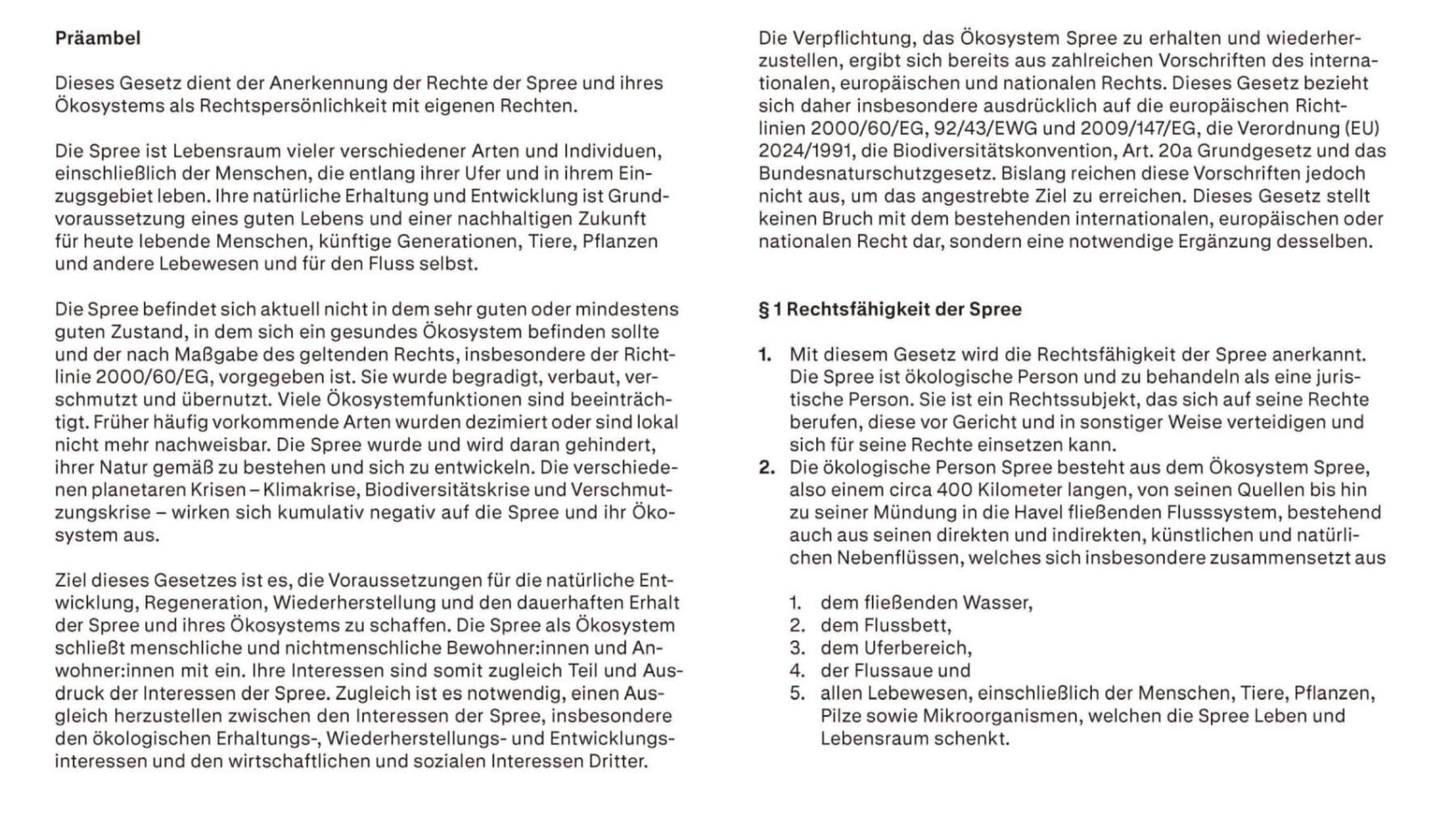
Ausschnitt aus dem Gesetzentwurf Rechte der Spree

Green Legal Impact Germany e.V., Rechte der Natur e.V., Jakob Kukula, HU Berlin und FU Berlin

Excerpt from the draft law Rights for the Spree River, developed by legal experts from Freie Universität Berlin and the initiative Green Legal Impact.

Several rivers around the world have now been recognized as legal persons, including the Whanganui River in Aotearoa/New Zealand – the result of decades of efforts by Māori – and the Machángara River in Ecuador. The crucial question, then, is not only whether a river can be granted rights, but also how those rights are subsequently put into practice. Lena Fließbach is particularly interested in the question of how a river can speak: “Who listens to it? Who translates its needs?” Is it artists, scientists, or people who live directly along its banks? If she were to lend the Spree a voice, it might sound like this: “I am tired of wastewater and noise. I wish for time to recover, clean riverbanks, and space for all those who live with me.”

These shifts in perspective and questions also shape the educational and outreach work surrounding On Water, initiated by Lena Fließbach at the Humboldt Labor. In workshops for school classes, children and young people take on the roles of the Spree, different fish and waterbirds, as well as political decision-makers. As Curator for Outreach, she places particular emphasis on bringing together a diversity of perspectives. Her work also focuses on building connections between the Humboldt Labor and Berlin’s wider public, as well as with different actors across the city’s scientific, cultural, and educational landscape.