Magazine
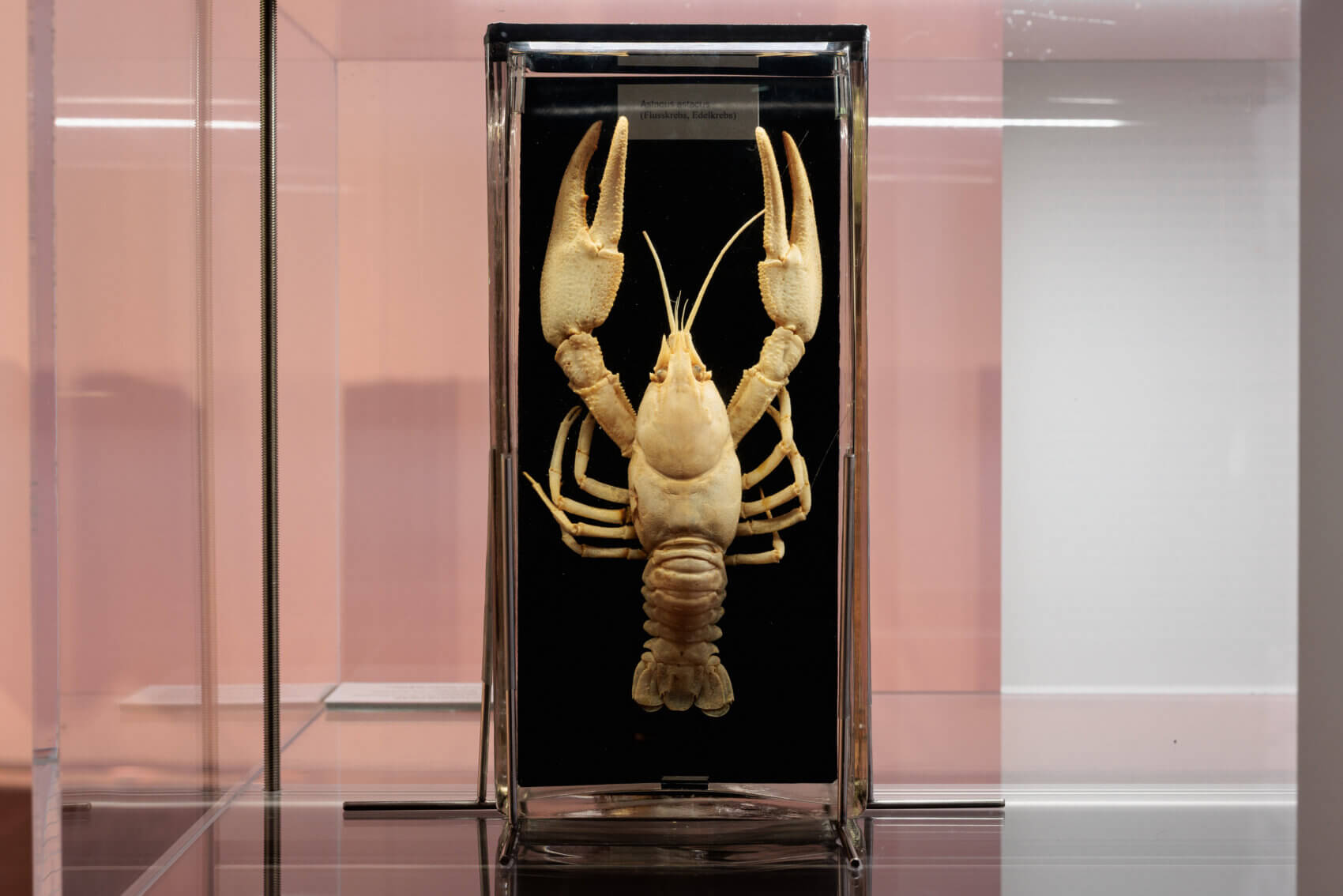
Nasspräparat eines Flusskrebses in einer Ausstellungsvitrine. Der Flusskrebs wirkt auf dem schwarzen Hintergrund weiß.

© Foto: Philipp Plum

Object Stories: Eileen Klingner and the Crayfish

From the series: “Object Stories: Meet the Team”


“These two crayfish always get me thinking,” says Eileen Klingner, pointing to two inconspicuous wet specimens in the section dedicated to river dwellers. As Curatorial and Management Assistant at the Humboldt Labor, she knows the exhibition On Water. WasserWissen in Berlin inside out – and yet these two objects continue to fascinate her in particular, as they speak equally to her interest in preparation techniques and ecological questions.
The European crayfish and the American swamp crayfish share more than their place in the pantograph and their taxonomic classification. They tell a story of the Anthropocene – a story of human intervention, translocation, and species extinction. Introduced into Berlin’s waters, American swamp crayfish have steadily displaced the native noble crayfish due to their particular adaptability and resistance to crayfish plague. The story of these objects reveals how human decisions intervene directly in ecosystems and shape local aquatic worlds.
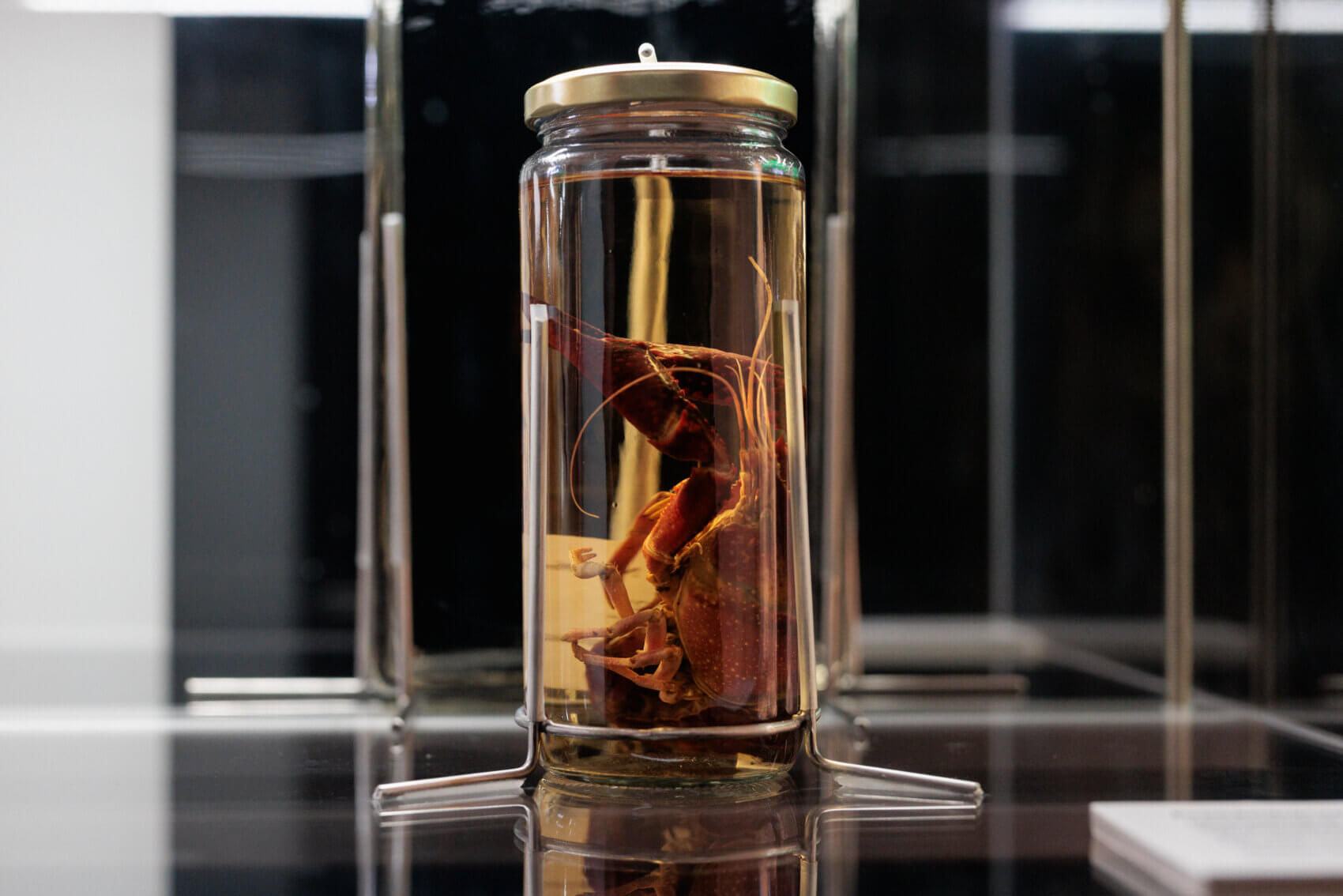
American swamp crayfish as a wet specimen – preserved differently, displayed differently.

Yet there is also a story behind the story, as Eileen Klingner points out: “What fascinates me in particular are the differences in the meanings humans assign to these animals, which also seem to be reflected in the preparation techniques. While the noble crayfish has been almost laid out on display as a permanent specimen, the swamp crayfish lies slumped in a murky jar.” From a human perspective, only one of the two crayfish appears to be truly valuable – “noble,” in this sense: the noble crayfish native to Berlin, whose attributed value may also stem from its economic exploitation as a sought-after culinary export.

Eileen Klingner

That Eileen Klingner is drawn in particular to the river dwellers is no coincidence. As a scholar of cultural history and theory, she is especially interested in more-than-human histories and in the perspectives and agency of non-human animals – precisely the kinds of connections that the preserved crayfish also bring to the fore. Her research interests also extend to techniques of preservation: she explores the tensions between anthropogenic species extinction and cryotechnological preservation in so-called Frozen Zoos. Alongside her work at the Humboldt Labor, she serves as Management Assistant to the Director at the Zentrum für Kulturtechnik and is currently working with curator Anna-Lisa Dieter on the exhibition catalog On Water. Fluid Perspectives.