From the Series: “Object Stories: Meet the Team”
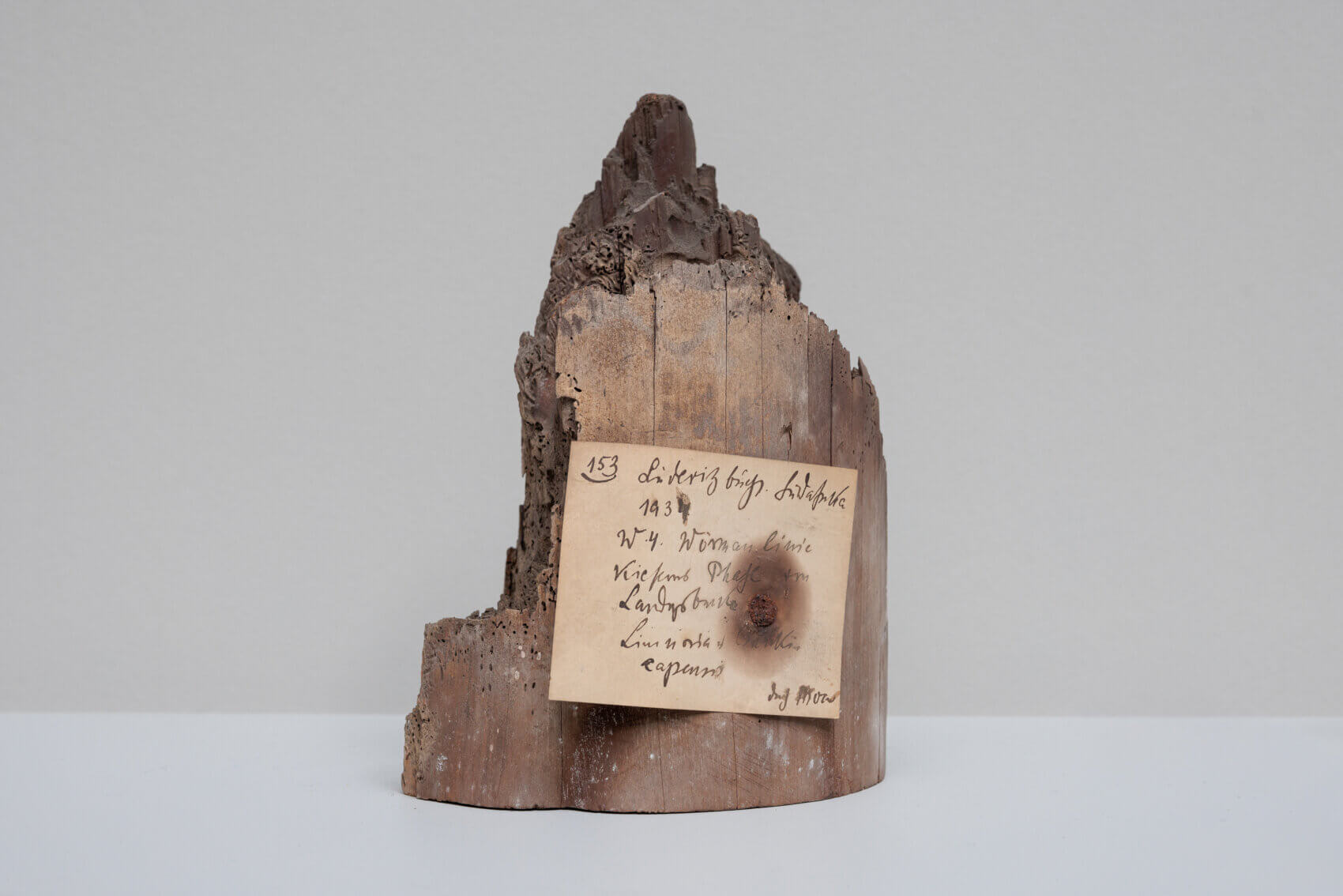
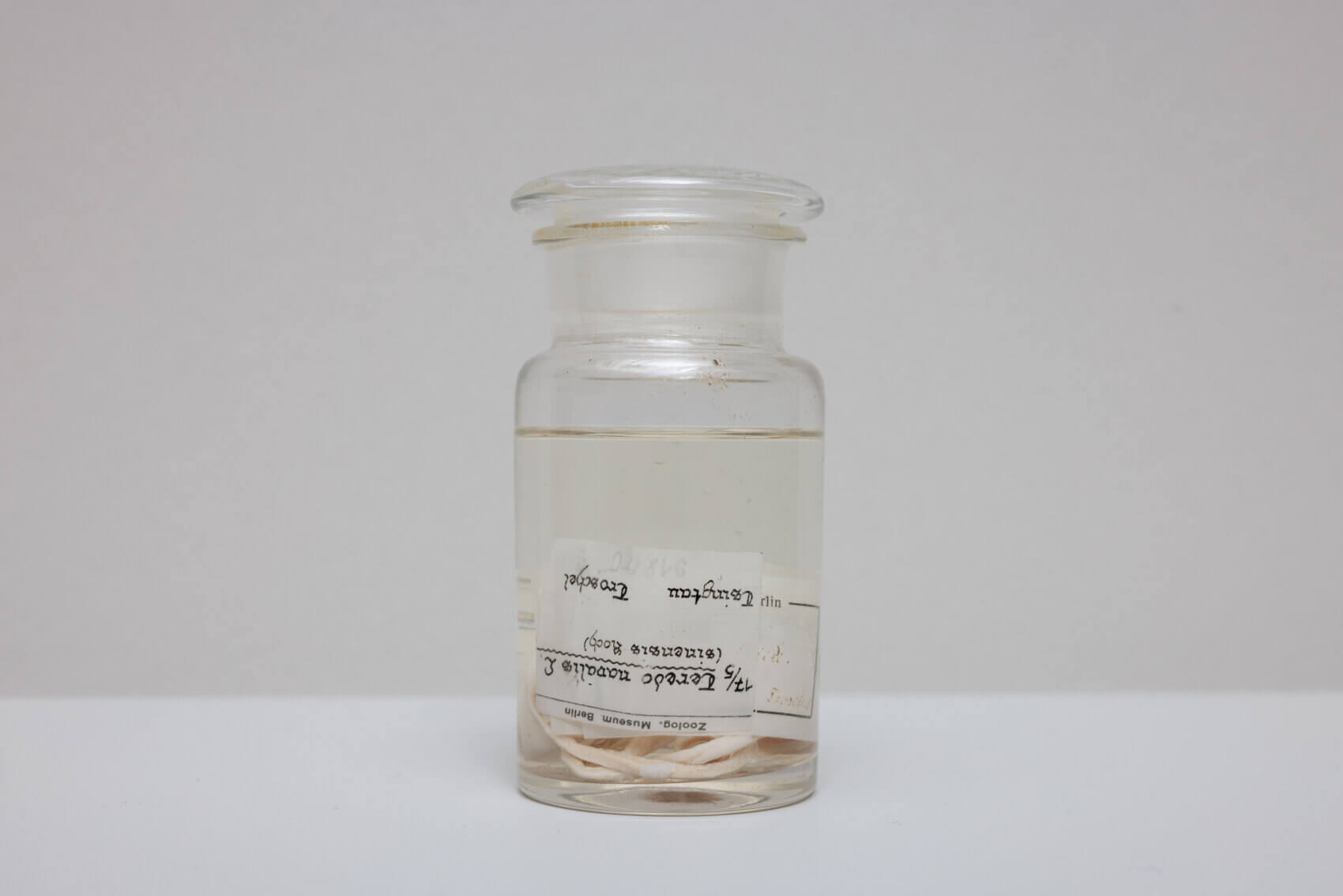
“The naval shipworm is a striking example of just how powerful even the smallest creatures can be,” explains Bastian Herbst, Curator for Outreach at the Humboldt Labor. In the exhibition On Water. WasserWissen in Berlin, the surprising power and colonial entanglements of Teredo navalis—to give the shipworm its scientific name—are brought to life through two objects: a historical wet specimen and a piece of a worm-eaten jetty pile.
Despite its name, the shipworm is not a worm but a mollusk. Growing up to 50 centimeters long, these animals have been considered a threat to ships and harbor facilities since antiquity. They bore through wood using their shells and even penetrated the insulating layers of the first submarine cables. According to one theory, Teredo navalis spread across the world’s oceans on the hulls of Dutch colonial ships returning from Indonesia. Colonial shipping may thus have contributed to the spread of a species that threatened the very infrastructure on which it depended. German colonial officials also sought ways to combat the mollusk. For example, the hydraulic engineer Ernst August Troschel investigated shipworm infestations while serving as a naval harbor engineer in the German colony of Tsingtau (present-day China), documenting his findings in the Handbuch der Holzkonservierung („Handbook of Wood Preservation“). A shipworm specimen he examined is now part of the mollusk collection at the Museum für Naturkunde Berlin. Together with the collection’s curator, Bastian Herbst rediscovered the specimen while preparing the exhibition “On Water.” For him, this unassuming wet specimen encapsulates a remarkable history:
“With its appetite for anything organic, this tiny mollusk became the scourge of seafarers, gnawing through the first submarine cables and damaging maritime infrastructure, much to the alarm of European colonial rulers.”