Magazine
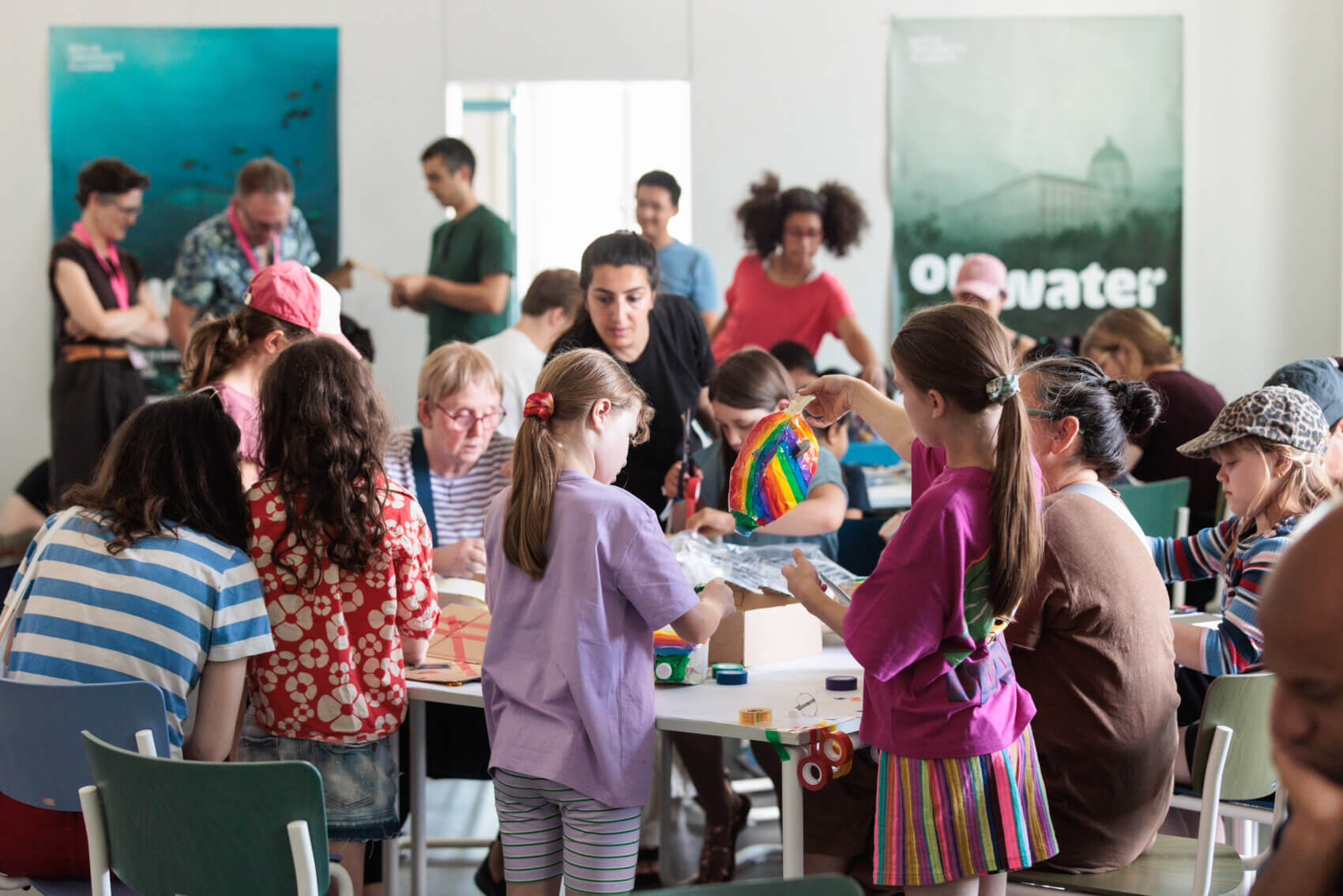
Einblick in den Workshop, Kinder in bunten Klamotten basteln Wassertiere. Sie werden von Erwachsenen begleitet.

© Foto: Philipp Plum

Giving Materials a Second Life: The WasserGestalten Workshop

As the creator of WasserGestalten, the family workshop accompanying the exhibition On Water. WasserWissen in Berlin at the Humboldt Labor in the Humboldt Forum, artist Vitor  Garcia de Almeida invites children and their families to explore the relationship between water, materials, and creativity. Inspired by the exhibition’s aquatic creatures, the workshop transforms discarded materials into imaginative water beings, encouraging participants to reflect on consumption, reuse, and environmental responsibility through hands-on making. For the artist, the workshop is rooted in the idea of giving discarded materials a second life:

“The idea behind this concept, and what distinguishes it, is the intention to rescue discarded materials before they are disposed of and to keep them longer within the metabolic cycle of resource extraction, consumption, and disposal through a second use.”

The project also reflects his artistic practice, combining, as he describes it, “a theoretical engagement with questions surrounding the consumption of nature since modernity” with “a practical artistic exploration of materials that have lost their economic value once they are discarded.” The workshop was conceived alongside the development of the exhibition On Water: “From the very first conversations between myself and the Curator for Outreach at the Humboldt Labor,” Garcia de Almeida recalls, “it was clear that the workshop needed to be closely connected to the exhibition concept.” Together, they developed a workshop centered on aquatic animals that would both introduce children to the topic of water and inspire them through creative making. Every creature is inspired by an object in the exhibition, from the boxfish to the jellyfish that greets visitors in the opening video installation.
The choice of materials is equally deliberate. Rather than utilizing new craft supplies, WasserGestalten works exclusively with discarded materials from the Humboldt Forum itself. As the artist explains, “This waste is generated in the various areas of the building: from materials necessary for the operation of the institution and the functioning of the exhibitions to areas such as the souvenir shop or the restaurant, all of which produce operational waste.” While these materials have reached the end of their economic life, he points out that “their economic value ends precisely at the point where they enter the waste stream. Their value as materials, however, remains.”
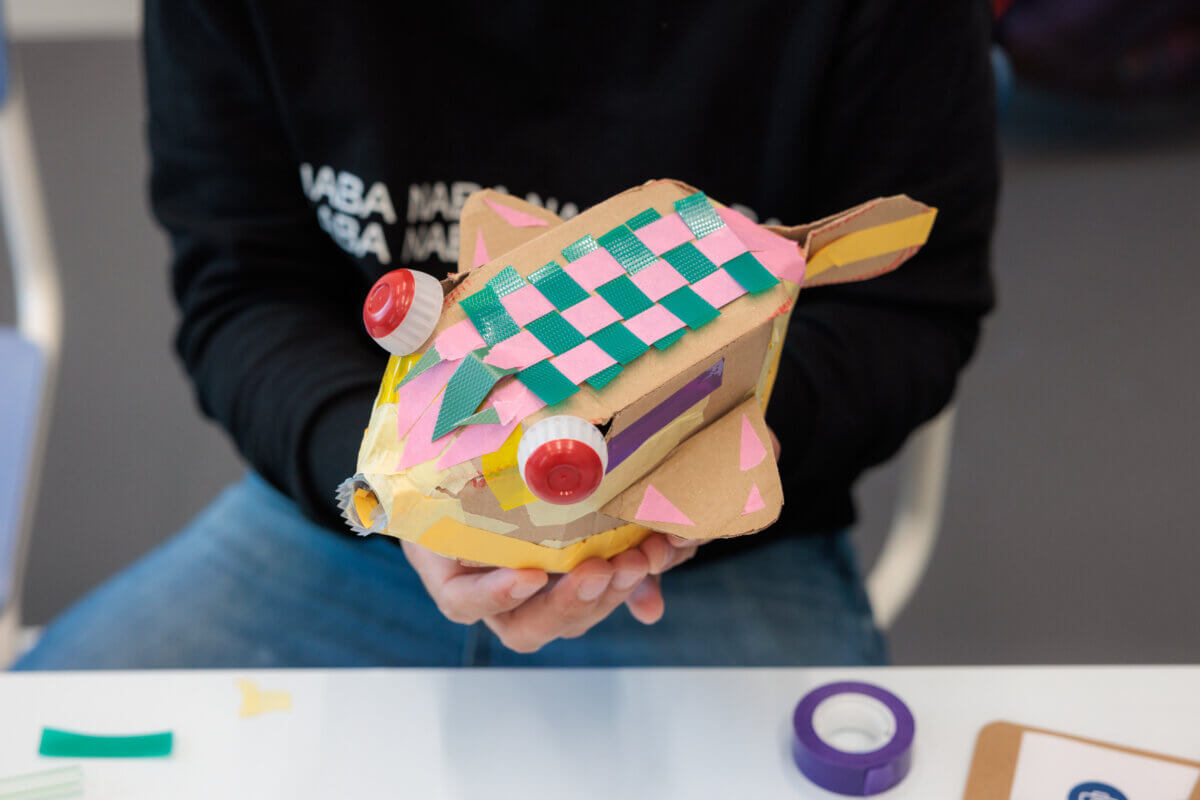
A handmade interpretation of the boxfish featured in the exhibition On Water. WasserWissen in Berlin

This transformation often changes the way participants think about the objects around them. Garcia de Almeida has observed that “the reuse of materials that people encounter, use, and discard in their everyday lives often creates a moment of surprise among participants, both children and adults. They begin to reflect on how interesting and functional certain materials can remain even after their original use. This reflection often leads to conversations about these materials and the possibilities that are still contained within them. This kind of engagement is precisely what the workshop aims to encourage.” It is this process that allows familiar everyday objects, such as pizza boxes, bottle caps, and packaging plastic to become playful water creatures.
The workshop also creates an accessible entry point into the environmental questions explored throughout On Water. WasserWissen in Berlin: “Children growing up in a large city like Berlin have often already noticed how, for example, plastic waste can pollute public spaces,” Garcia de Almeida says. “In the workshop, they work with similar materials. This allows them to reflect on the possibilities of reusing these materials while also imagining how they could contribute to environmental pollution if they had not been reused.”

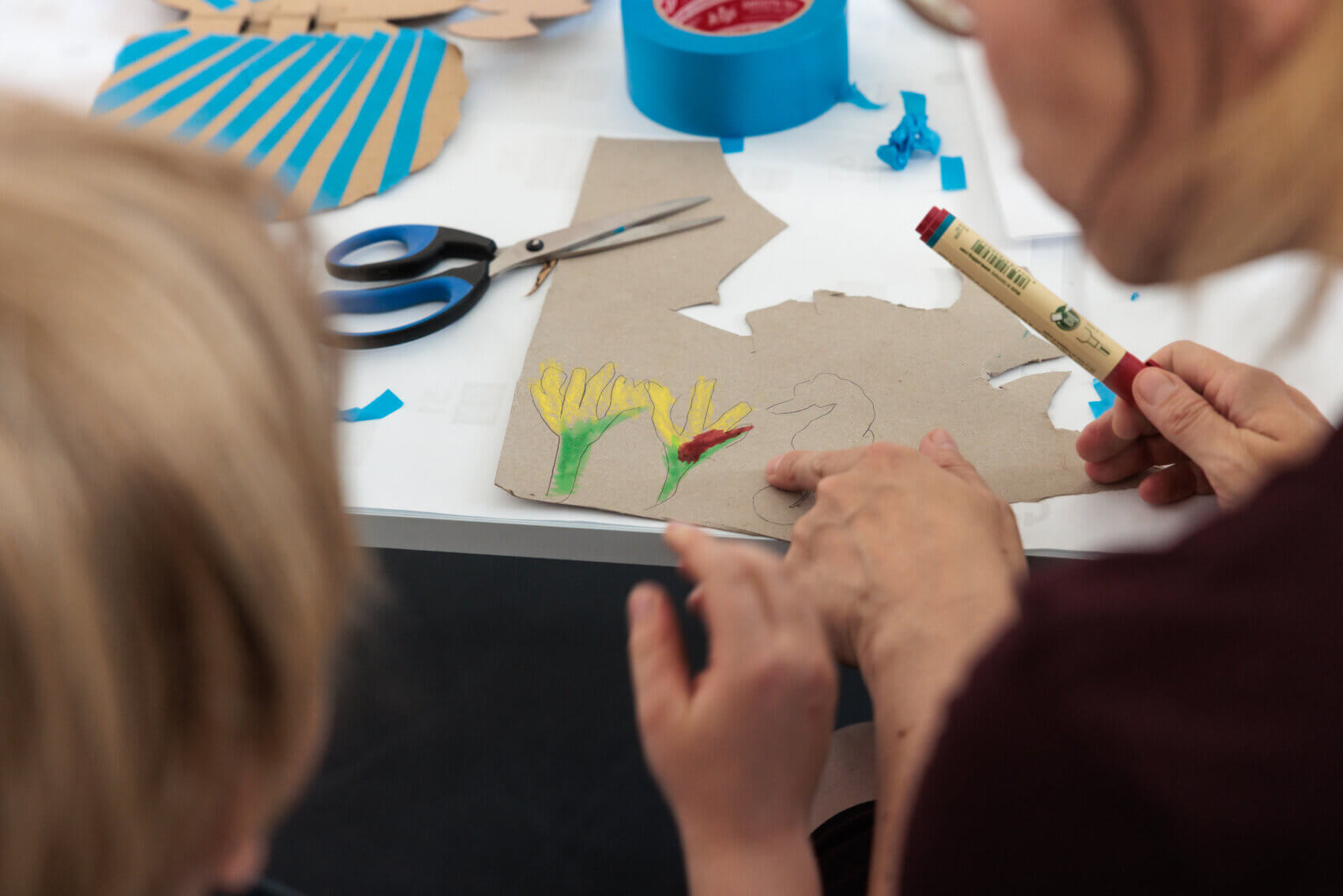
Participants create aquatic creatures using recycled materials from the Humboldt Forum

For the artist, creativity is an essential part of responding to today’s ecological challenges. The workshop is designed not only to raise awareness, but also to inspire confidence and imagination. He hopes that children “could develop an awareness of these issues through a creative process; without reinforcing a sense of helplessness in the face of the problem, but instead encouraging a positive and empowering attitude toward finding future solutions.”

That same spirit is reflected in one of the workshop’s most distinctive creations: the jellyfish. As Vitor Garcia de Almeida explains, “The jellyfish was conceived as a particularly performative water creature. On the one hand, its design encourages creativity during the making process; on the other, it invites participants to bring the finished creature to life through playful, dance like movements. In this way, it combines creative making with embodied experience, establishing a direct connection to the themes of the exhibition.”

Ultimately, WasserGestalten extends and intensifies the exhibition’s participatory approach, adapting its scientific and artistic perspectives into an accessible experience for children and their families. As Vitor puts it, “What the exhibition conveys through its objects, videos, and texts is taken up in the workshop through child-friendly educational methods and made tangible through hands-on experience.” His hope is that visitors leave not only with a handmade water creature, but also with a new awareness of one of the exhibition’s central themes:

“The goal of the workshop would be achieved if children and their families could approach the urgency of engaging with the topic of water in a playful way and bring it into their awareness.”