From the series: “Object Stories: Meet the Team”
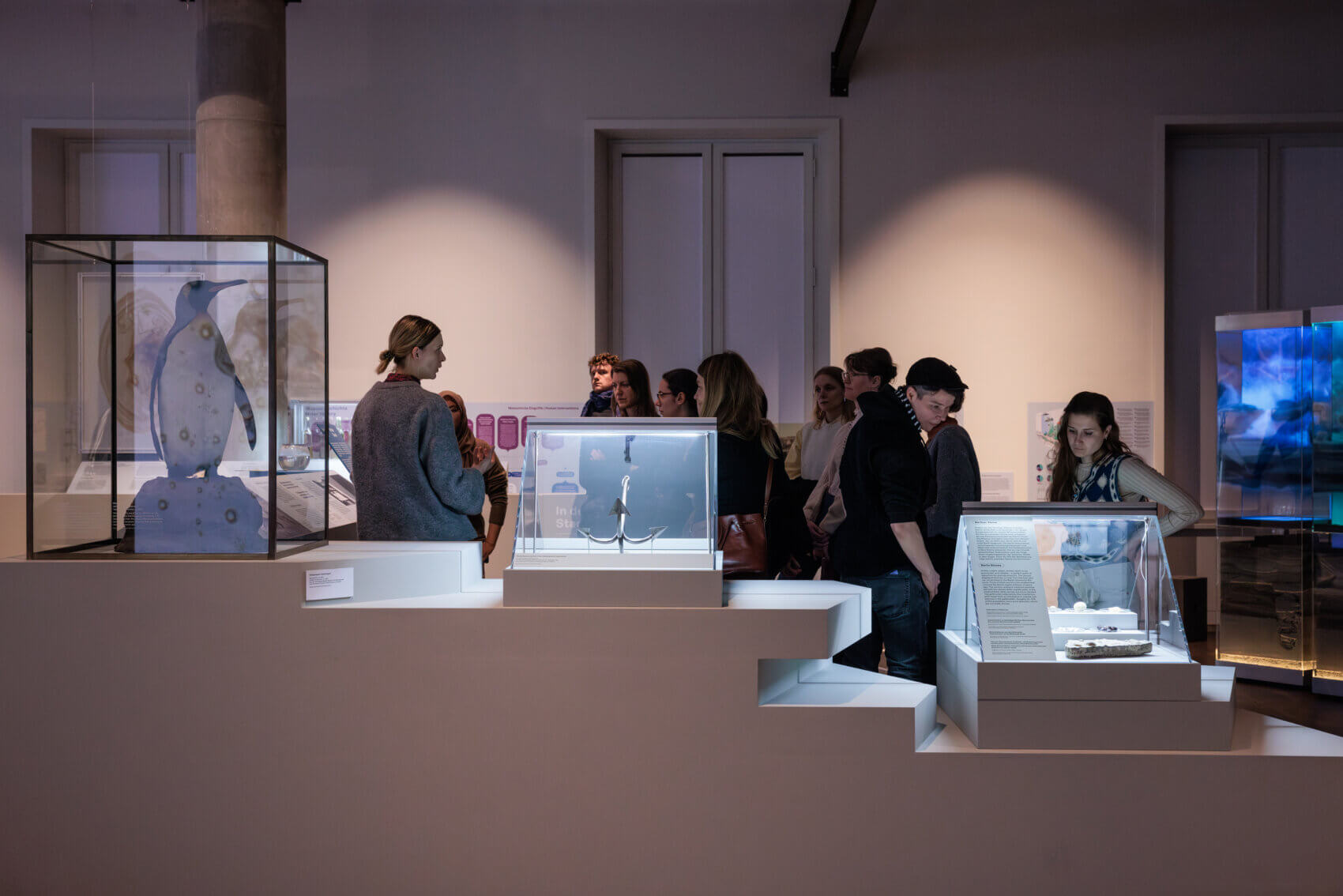
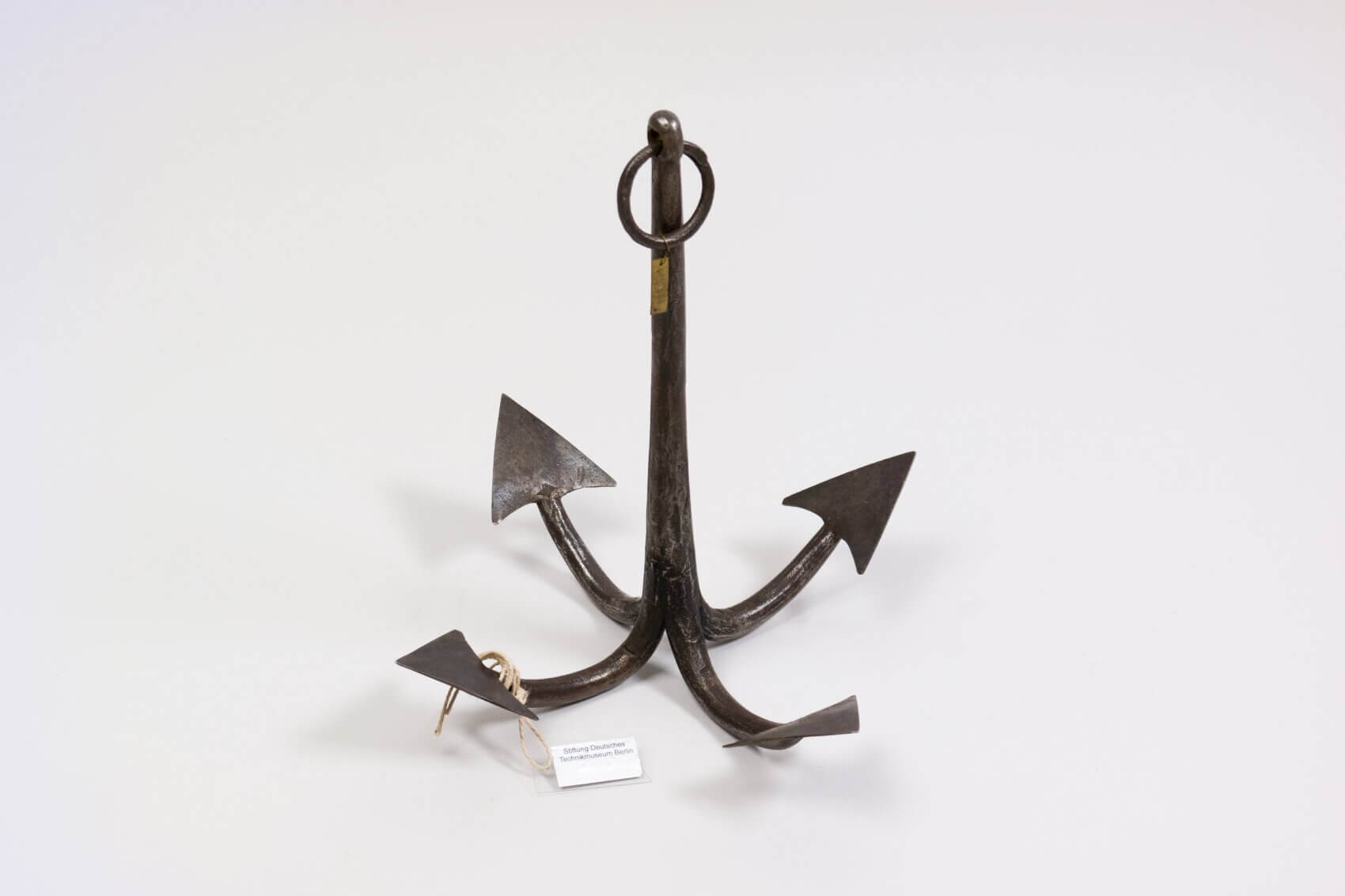
For Anja Walther the small nineteenth-century four-fluke boat anchor (grapnel) is emblematic of the eventful history of university collections in Berlin. In On Water. WasserWissen in Berlin, the museologist approaches the grapnel from this collection-historical perspective: “The anchor reminds me of a largely forgotten museum landscape in Berlin, much of which was destroyed in the course of the Second World War.”
The exhibit comes from the collection of the former, popular Museum für Meereskunde, which was opened by the Berliner Universität (founded in 1809/10) in 1906 in the city center, at Georgenstraße 34–36. In the exhibition On Water. WasserWissen in Berlin, the anchor serves, among other things, as a representative material testimony to the turbulent history of Humboldt-Universität zu Berlin—the successor institution to the Berliner Universität—with its teaching and research collections, some of which have survived to the present day.
As a historical exhibition object, it also stands as an example of the once very popular, publicly accessible university museums that were firmly established in Berlin’s museum landscape before 1945 and have, as a result of the Second World War, largely disappeared from it today. Some objects from the Museum für Meereskunde, including this anchor, fortunately survived the upheavals of the period. For Anja Walther, the anchor thus embodies two contrasting meanings:
“As a ship’s anchor, it represents stability; at the same time, as a surviving relic of the now-vanished Museum für Meereskunde in Berlin, which was extremely popular in its day, it serves as a reminder of the fragility of human culture.”